


Shirt
Why Choose Us
Production Equipment
Automatic cutting bed, sewing machine, large ironing table, lining machine, cutting bed, buttonhole machine, button sewing machine, etc.
Our Factory
Our factory located in the southern part of Jiangsu Province, located in the heart of the Yangtze River Delta and Taihu region, north of Zhejiang Jiaxing, south of Suzhou, east of Shanghai, West near Taihu Lake, Shengze Town is China's important silk textile production base and product distribution center.
Our Product
Mainly products include: Silk Eyeshade, Silk Underwear, Silk Face Mask, Silk Pajamas, Gift Sets etc.
High quality service
Creative and technical high-quality services from the initial idea to the finished product.
What is Shirt?
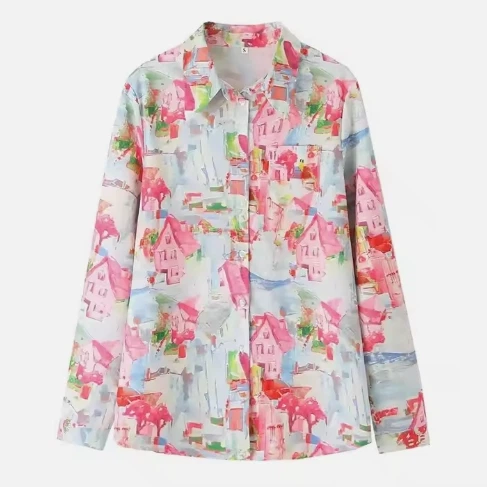
A shirt is a cloth garment for the upper body. Originally an undergarment worn exclusively by men, it has become, in American English, a catch-all term for a broad variety of upper-body garments and undergarments.


Tips For Sewing a Shirt
Choose the right fabric
If this is your first attempt at sewing a basic pullover T-shirt, select a knit fabric that’s easy to work with. Jersey knit or fabric with ribbing vertical lines that stretch upon donning the garment are popular choices. Alternatively, make your first shirt out of basic cotton fabric.
Find a simple sewing pattern
Look for a basic pull-over T-shirt pattern that doesn’t require buttons or too many seams. Even with this simple silhouette, there are many options for T-shirts, including long and short sleeves or fitted and oversized styles. Find a sewing pattern with a simple detail like a front pocket or V-neckline.
Keep the fabric flat
Knit fabric is very stretchy, so keep it flat as you measure, cut, and sew. Fabric stretching under your hands or hanging off the edge of your workspace will interfere with the accuracy of your measurements.
Use sharp tools
Use sharp fabric scissors to ensure straight cuts and protect against fraying. Every few sewing projects, replace the needle in your sewing machine to keep it sharp and working properly.
Types of Shirts
Baseball shirt
This collarless shirt, worn by baseball players as a uniform with team logos, features three-quarter-length sleeves and buttons down the front. A baseball shirt can also refer to a three-quarter-length buttonless shirt with a white body and a contrasting color on the sleeves.
Cuban collar shirt
These short-sleeve shirts are button-ups with an open, double-notch, one-piece collar, also known as a camp collar. Cuban collar shirts are made with breathable materials and are boxy and loose-fitting. Typically, this type of shirt is worn untucked, but you can tuck it in for a more fitted look.
Button-down shirt
A button-down shirt is a collared shirt with long sleeves, half sleeves, or short sleeves. Contrary to a button-up shirt, a button-down has a button in the collar and can be formal or casual in style.
Polo shirt
The polo shirt, created by American designer Ralph Lauren, has short sleeves, a collar, and a button placket down the center front. The polo shirt was designed as casual wear, but you can also sport a polo shirt on more formal occasions, especially under a blazer.
Dress shirt
This formal shirt has a stiff collar, buttons down the front, sleeve cuffs, and a spread collar to accommodate a Windsor knot tie. You can wear a dress shirt under a blazer.
Flannel shirt
Flannel is a loosely woven fabric known for being soft and warm. Flannel shirts can be button-up or button-down shirts.
Henley shirt
Henleys are casual, collarless shirts with long or short sleeves and a button placket down the center front.
Linen shirt
Linen is a strong, lightweight fabric made from the flax plant. Linen shirts are ideal for keeping the body cool during the summer months and come in a variety of collar and sleeve styles, as well as buttons and pullovers.
Oxford shirt
These button-down shirts feature Oxford material, a basket weave that’s slightly shiny. You can wear an Oxford shirt for both casual and formal occasions.
Denim shirt
Denim shirts are denim—A rugged cotton fabric and feature a button-down collar. Cowboys first wore these durable, easily washable shirts.
Prepare your workspace.
Set your workspace up to make your tools, fabric, and pattern easily accessible. Unfurl your fabric on your work surface so that it lays flat and is not hanging over the edge. The wrong side (or underside) of the fabric should be facing up. If needed, place a mat underneath it to protect your work surface from pinpricks, cuts, and scratches.
Pin and cut out the pattern.
Cut out your pattern pieces, lay them out on your fabric, and pin them down. Use tailor’s chalk to trace the pieces onto the fabric, and cut them out according to the pattern, leaving a half-inch seam allowance on all sides.
Sew the shoulder seams.
Lay the front piece of the shirt on top of the back piece so that the edges are in alignment and the inside of the fabric is facing out. Pin the shoulder pieces together. Using the sewing machine, sew the front and back of the shirt together to connect the pieces.
Make the neckline.
Sew the strip of fabric you cut for the neckline so that it makes a loop. Open your now-connected front and back pieces like a book and lay them flat so that the neck hole makes a complete circle. Pin the neckband onto this hole. Sew the fabric all the way around the neckline to attach.
Add sleeves.
Keep your T-shirt open and flat on your workspace so that the neckline still makes a complete circle. Pin one sleeve to the appropriate shoulder so that it lies flat like the rest of the shirt. The seam allowance on the sleeve should be underneath the shoulder to hide raw edges. Add pins to attach either side of the sleeve to the front and back pieces, stopping at the armhole. Repeat for the other sleeve. Sew the sleeves in place where you added pins.
Finish the sleeves and close the sides.
Pick your shirt up and fold it in half at the neckline so that it resembles a finished T-shirt, and the front panel is lying stacked over the back one. The inside should still be facing out. Lay your T-shirt back down on your workspace. Leaving the armholes open, add pins from the underarm to the bottom of each side of the shirt. Sew along the right side to add a side seam. Repeat for the left side.
Hem the bottom and sleeves.
Fold the bottom edge of your T-shirt under twice to hide the raw edges. Use an iron to press. Straight stitch the bottom hem of the shirt. Repeat this process for each sleeve to complete the project. Turn the shirt right-side out.
Collar
There are a wide variety of different cuts and styles of collars that we will cover in a later article. A collar is the fabric that wraps around the neck at the top of a dress shirt. If you are speaking with a tailor, they might argue that the actual “collar” is specifically the fabric that is folded over at the neck that stylistically frames the knot of the tie. By this definition, the small band of fabric that attaches the collar to the shirt is actually the “collar band.” While this is great to be aware of, typically in theatre, you won’t have to be any more specific than “collar” and people will generally know what you are referring to.
Pocket
A pocket is fairly self-explanatory. It typically sits on the left side of the shirt front. The most common pocket you’ll see in a basic dress shirt is called a “patch pocket,” but there are many different types of pockets for different styles of shirts which we will cover in a later article.
Sleeve
If you have worn clothes before, you have probably seen a sleeve. When it comes to the fit of a dress shirt, the sleeve length is very important, so we felt it should be mentioned in this article. On a modern-day dress shirt, the sleeve seam should hit close to the top of the shoulders. The cuff should then hit right at the base of the thumb for a perfect fit.

Front Placket
The front placket is the center front part of the dress shirt. It is the strip of typically folded over or doubled fabric that typically contains the buttons on one side and the button holes on the other. Some shirts (such as tux shirts) might have buttonholes on both sides. In this case, you would use studs to close the shirt. Referring back to the basic definition of a dress shirt, a front placket is a key feature that makes a dress shirt a dress shirt.
Cuff
A cuff is the stiff layers of fabric that are stitched at the end of the sleeve to finish it around the wrist. The cuff can typically be unbuttoned to lay flat and to help pull the sleeve over the hand. They typically come with buttons attached to slip through the button holes. The cuff is also one of the many points to would typically rig in a dress shirt for a quick change.
Gusset
You may see a small gusset at the hem of the side seam of a dress shirt. This small triangular piece of fabric might be made out of the same fabric as the rest of the shirt, or a contrasting fabric if the style of the shirt allows it. The gusset stabilizes the side seam of the shirt, by strengthening the end of the stitch line, which is a typically weak area that is prone to coming unstitched.
What To Consider When Buying a Shirt?
Fabric
Shirts come in various different types of fabrics, the most common ones being cotton and linen. You should choose the fabric based on the occasion.
Cotton:
Probably the most used fabric in the world. Cotton is a natural fabric that easily absorbes humidity and lets air pass through. It’s resistant, usually holds it's shape well and can be washed at home, however may shrink when put in the dryer. Also the colour can fade away with time depending on what is used to color the cotton. If you are looking for shirts made out of cotton make sure they are 100% cotton, as sometimes they blend it with polyester or viscose. These last two fabrics are not natural and thus will make the shirt less breathable.
Linen:
This fabric is obtained from the stem of the flax plant. It’s celular structure is more crystalline making it harder and rigid compared with cotton. This fabric is highly fresh, usually worn in hot countries or the beach. The big minus of this fabric is that it wrinkles very easily and because of that we don’t recommend using linen shirts at formal events (only if you are invited to a wedding on the beach and the dress code states linen).
Fit
Fit is the most important thing to consider when buying a shirt.
Neck: if you’re buying a formal shirt make sure you can button your neck so that it is not too tight but also not too loose. If you can place your finger between your neck and the collar of the shirt without it being too tight then it is the correct fit.
Shoulders: Make sure that the line connecting the sleeve to the shirt is where your shoulder ends. If it passes your shoulder it will make your body bigger in a non flattering way, and people will simply see that the shirt is too big for you. If the line comes before your shoulder the shirt is too small for you and you will most likely not be able to move around comfortably in it and a tailor will not be able to do anything to fix it. While if the shirt is too big in the shoulders a tailor can try to make them smaller however it is not recommended as it can deform the shirt's original look.
Length: If you’re buying a formal shirt and it barely covers the belt line, it is too short. Look for one that almost covers your crotch area but does not pass it. This will help the dress shirt stay tucked in correctly. For a casual shirt we advise you to look for a shirt where the sides of the shirt pass your belt area by about 2-3 inches, the front and back will be longer but at a good length.
Sleeve length: For both formal and casual shirts, the sleeve should cover your wrist bone, but should not pass the base of your thumb. If your sleeves are too long your arms won't look proportional to your body while if your sleeves are too short it can give you a kind of t-rex effect. Sleeve length is usually the most common adjustment people take to get tailored since it is very hard to find a "Ready To Wear" or in short RTW shirt in a retail store that actually fits you perfectly.
Cuff: There are many types of cuff styles and they all have one rule in common: If you can slide your hand out of the cuff when its buttoned then is too big, and if when buttoned your watch doesn’t fit, it is too small. Focus on looking for a cuff that naturally moves along with your suit sleeves.
Waist: The button line of the shirt should be straight. If the fabric next to the buttons looks like its being pulled then the shirt is too small for you, try sizing up. If there is a lot of extra fabric on the sides creating a muffin top effect when the shirt is tucked in then it is too big for you. If the shirt is too big it can easily be adjusted by a tailor while if it is too small a tailor can't help you. The shirt should come naturally down following your body shape. Like the sleeve length, taking the shirt to the tailor to adjust the sides is also a common adjustment people do.
Our Factory
Suzhou Chloe Fashion Co., Ltd. is located in Suzhou Shengze Town,Shengze Town belongs to The Wujiang District of Suzhou City, Jiangsu Province.Our factory located in the southern part of Jiangsu Province, located in the heart of the Yangtze River Delta and Taihu region, north of Zhejiang Jiaxing, south of Suzhou, east of Shanghai, West near Taihu Lake, Shengze Town is China's important silk textile production base and product distribution center, the history of "sunrise million horses, clothing by the world" is famous, has the "silk capital" reputation.
FAQ
As one of the leading shirt manufacturers in China, we warmly welcome you to wholesale high quality shirt at competitive price from our factory. For quotation, contact us now.
Print 100 Viscose Shirt, Hand Embroidery Linen Shirt, Solid 100 Cotton Shirt